
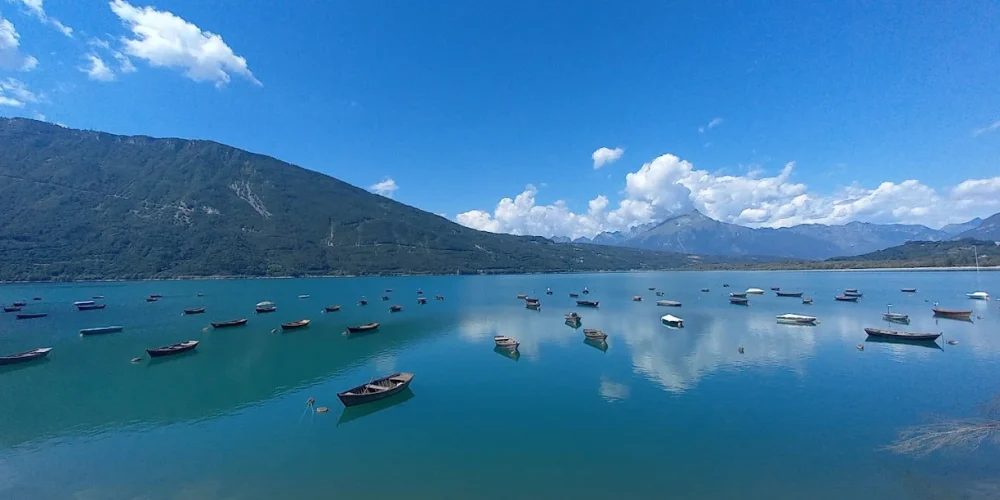
Within the Alpago basin in the province of Belluno, the Santa Croce Lake Nature Oasis is one of the most underrated wetlands in the Veneto region.
In this guide, you’ll find the practical information you actually need before lacing up your boots! We’ll cover the trails, the wildlife you can realistically expect to see, the scenic highlights, and a few honest tips on how to plan your trip.
All about the Santa Croce Lake Nature Oasis
The Santa Croce Lake Nature Oasis, known locally as the Oasi degli Sbarai, sits on the shores of Lake Santa Croce in the municipality of Farra d’Alpago.
The lake itself is the largest in the province of Belluno and the second largest in the Veneto. The whole basin is included in the Natura 2000 Network as a Site of Community Importance, which is why the oasis is so carefully managed today.
Facts about the lake
| Feature | Detail |
|---|---|
| Location | Farra d’Alpago, province of Belluno, Veneto |
| Lake surface area | 7.2 km² (largest in Belluno) |
| Lake altitude | 386 metres above sea level |
| Average depth | 33 metres |
| Oasis size | Over 30 hectares of wetland |
| Protected status | Natura 2000 |
| Best for | Birdwatching, easy hiking, lakeside cycling |
| Admission | Free, year-round access |
Exploring the Santa Croce Lake Nature Oasis Trail
The Santa Croce Lake Nature Oasis Trail is the northern lakeshore path that links the village of Bastia with the wetland reserve and continues around the eastern shore. It is flat, well-signposted, and accessible to most fitness levels. If you have a bike, the same network of paths supports a popular cycling loop.
The four main routes we recommend
- The full lake loop (cycling): roughly 14 km on mostly paved and gravel paths around the entire shoreline. A relaxed pace gets you round in 45 minutes to an hour by bike; walking the same loop takes between two and three hours.
- Eastern shore cycle path: about 8 km on a dedicated, concrete cycle track shaded by trees. This is the section most families and casual riders choose, and it links directly with the oasis path at Bastia.
- Lake Santa Croce loop from Farra d’Alpago (hiking): a moderate 8.4 km circular walk that takes you through the wetland reeds and along the northern bank.
- Bar Vela – Lake View Terrace – Val Zemola loop: a more demanding 8.5 km route with around 300 m of ascent, taking just under three hours, with a dedicated viewing terrace over the lake.
The classic starting point is the large car park on Via Grava in Bastia d’Alpago. From there, the route drops onto Via del Mulino, crosses Viale Alpago, and slips onto a quiet dirt track signed “Oasi Naturalistica“.
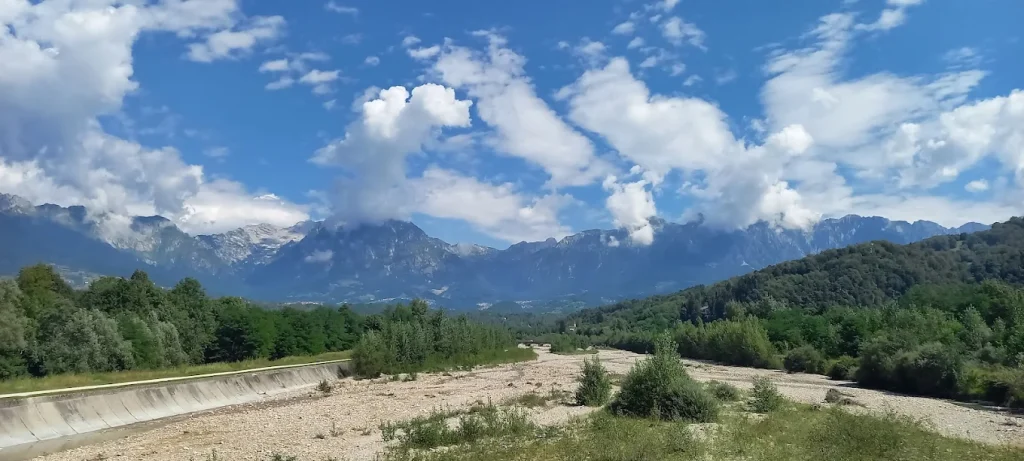
You’ll spend the first two kilometres weaving through reeds, poplars, and willows before the bridge over the Tesa stream brings you out at the lake itself. If you’re cycling on, expect a small set of steps on one footbridge; you’ll need to lift the bike for a few metres.
Birdwatching and local wildlife in the area
This is the reason that naturalists put the Alpago basin on their list of must-visit places. The wetland is full of open water, reed beds, willow scrub, and damp meadow, which supports a wide range of birds for a mountain location at 386 metres.
You’re realistically likely to spot:
- Little Grebe: small, dumpy diving bird often seen on calm water near the reeds
- Grey Heron: present year-round, easy to pick out along the shoreline
- Lapwing: recognisable by its tufted crest and tumbling flight
- Reed Warbler and Sedge Warbler: heard more often than seen, deep in the reed beds
- Penduline Tit: builds its distinctive purse-shaped nest in willow branches
- White Stork: an occasional but memorable visitor
Apart from birds, keep an eye out for roe deer, frogs, and dragonflies through the warmer months, and the lake’s fish stocks, pike, trout, and the rare local whitefish, protected through a conservation programme run from the Baia delle Sirene fish hatchery on the southern shore.
Scenic highlights of the protected landscape
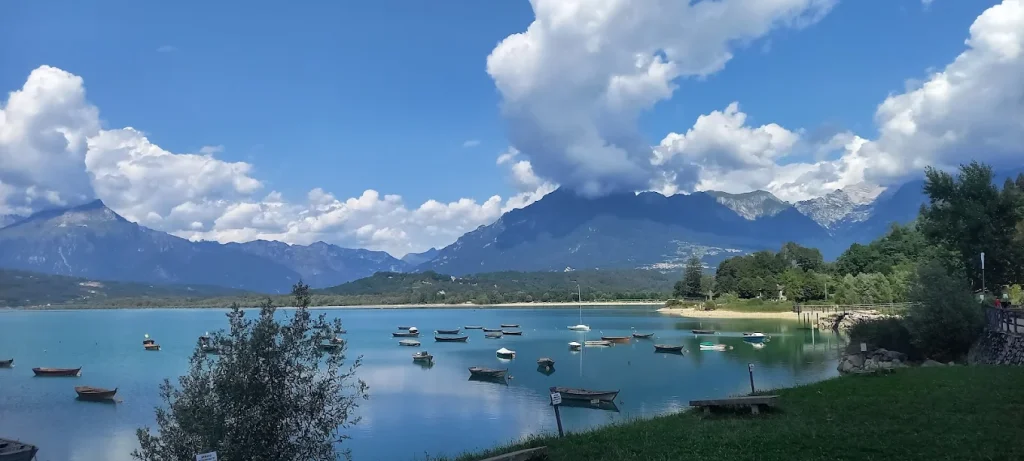
- The submerged forest: when lake levels drop in late summer and autumn, you can see willow trunks rising directly from the water; the local nickname is the “submerged forest.”
- The villages of Bastia and Sitran: a short detour brings you to stone houses with carved portals, typical of rural Alpago architecture
- Lake View Terrace above Farra: a built wooden platform giving a clean, elevated view across the whole basin to Cansiglio
- The Madonna del Lago church: a tiny, often-overlooked sanctuary on the lake’s eastern side
- The kitesurfing beach: on a windy afternoon, the southern shore fills with sails. Santa Croce is one of the windiest lakes in northern Italy and hosts national championships
Tips for hikers and nature enthusiasts
The oasis is genuinely easy to enjoy, but a few practical points will save you time.
| Pros | Cons |
|---|---|
| Free entry, no booking, no permits | Some sections of trail can be muddy after rain |
| Flat terrain, suitable for families and older walkers | Limited shade in the open reed sections during midday |
| Easy parking at Bastia and Farra | Public transport access is sparse; a car helps |
| Hiking and cycling on the same network | The footbridge near the camping site has small steps |
| Quieter than the big-name Dolomite lakes | Mosquitoes in still summer evenings |
The best time to visit is the spring (April–May) for migrating birds and snowdrops in the undergrowth, while in autumn (October–early November) for clear light, low water levels, and far fewer people.
Summer is fine, but expect the lakeside beaches and parking to fill quickly on weekends. Alternatively, winter walks are beautiful, but the upper trails can ice over after a cold snap.
Plan your visit to Lake Santa Croce
The Santa Croce Lake Nature Oasis is the kind of place you’ll want to spend a day at a pace that suits genuine exploration rather than queueing for photo spots.
Ready to reserve your stay near the trailhead? D4U offers handpicked apartments and chalets across the Alpago basin, so you can wake up to the lake, cycle out before breakfast, and be back for a long evening on the terrace.
Browse our Alpago apartments to plan your stay. For neighbouring villages worth a half-day visit, our guides to Chies d’Alpago and Pieve d’Alpago are a useful next step.


