
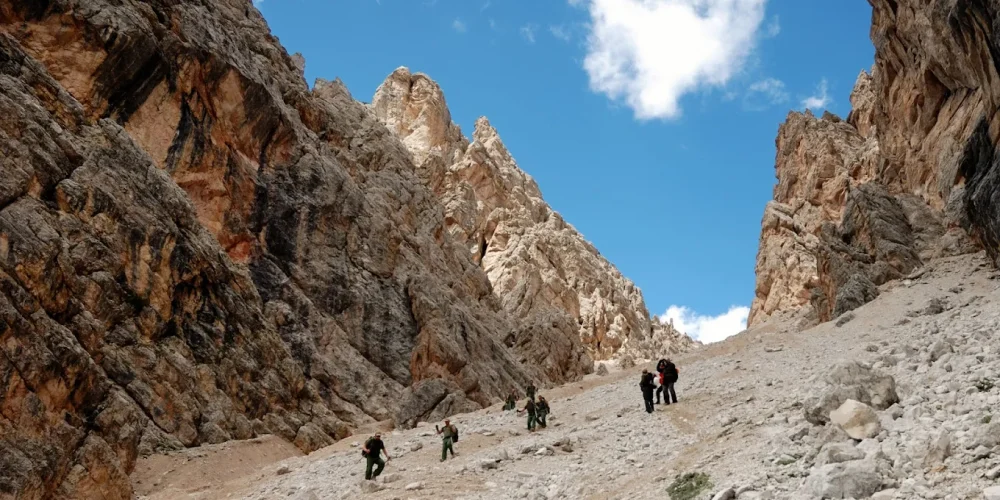
Located right above the famous resort of Cortina d’Ampezzo, Pomagagnon is one of the most recognisable mountain ridges in the Italian Dolomites.
It’s known for its skyline, historic wartime ledges, and scenic climbing routes.
This guide explores everything needed to plan an excursion to Mount Pomagagnon, including how to reach the trailheads, details of the Pomagagnon Via Ferrata, route difficulty, essential equipment, and the spectacular viewpoints that make the climb worthwhile.
Pomagagnon and the Via Ferratas
Pomagagnon is a Dolomite mountain chain located just north of Cortina d’Ampezzo in the Veneto region of Italy. The highest summit of Mount Pomagagnon reaches approximately 2,450 metres.
The mountain is popular for climbing and expert hiking because it has several via ferrata routes that combine historical trails with moderate technical climbing.
Unlike some of the more famous Dolomite ferratas, Pomagagnon is usually less crowded.
Facts about Pomagagnon:
- Location: Ampezzo Dolomites, Veneto, Italy
- Highest point: approx. 2,450 m
- Best season: June to September
- Average climb duration: 5–8 hours, depending on route
- Main attraction: the Pomagagnon Via Ferrata and Terza Cengia ledge system
The massif also holds historical significance, as many of the paths were originally constructed during World War I for military movement along the mountain.
What is the Pomagagnon Via Ferrata?
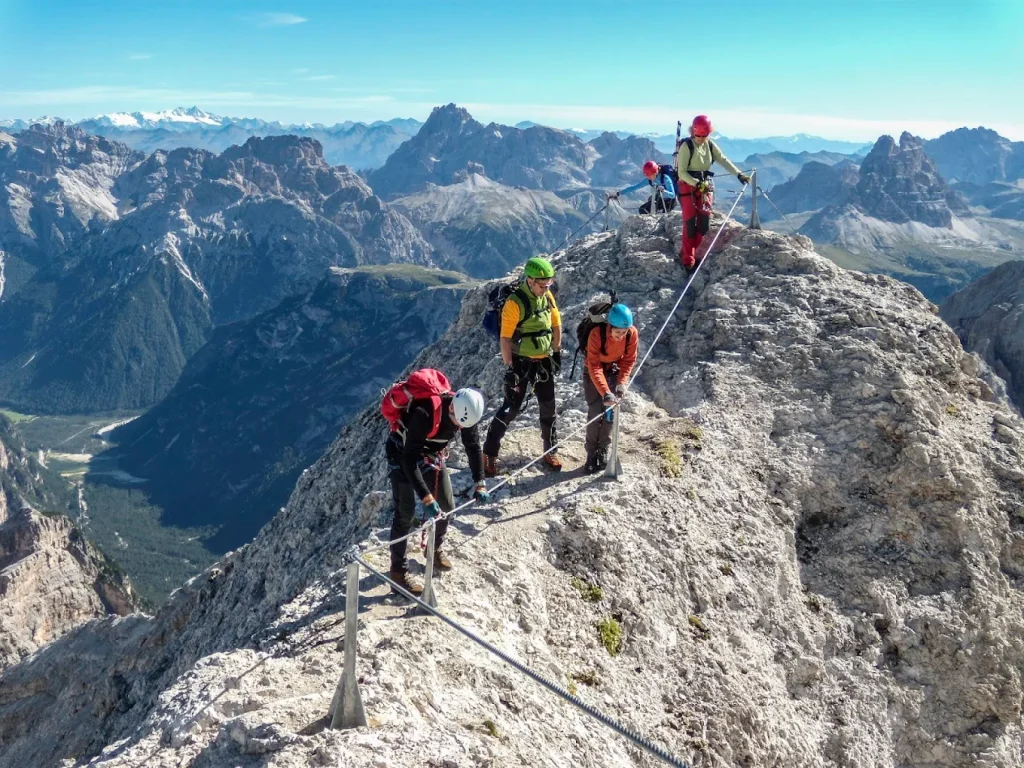
A via ferrata, meaning “iron path” in Italian, is a protected climbing route with steel cables, ladders, and anchors designed for hikers to traverse steep mountain terrain safely while wearing specialised equipment.
The Pomagagnon Via Ferrata is one of the most scenic ferrata experiences in the Cortina region. Much of the route follows the Terza Cengia, a historic wartime ledge carved into the rock face during World War I.
Highlights of the route
The route has many narrow rock ledges that provide continuous views over the valley, along with short vertical climbing sections secured by steel cables. It is distinct for its historic military pathways carved into the mountain during wartime.
Advantages
- Exceptional scenery throughout the route
- Moderate technical difficulty suitable for experienced hikers
- Strong historical interest
Challenges
- Long duration requiring good endurance
- Exposure may be uncomfortable for beginners
- Weather conditions can change rapidly at altitude
How to get to Mount Pomagagnon
Mount Pomagagnon is easily accessible from Cortina d’Ampezzo, one of the main Alpine centres of the Dolomites. The most common approach is from the Fiames area, located just north of the town along the SS51 road.
Travel logistics
The mountain can be reached by car, with parking areas available near Fiames and along the main valley road. You can use public transport by taking the regional Dolomiti bus routes that stop close to the Fiames access point.
From there, the hike to the base of the via ferrata typically takes between 1.5 and 2.5 hours, depending on the chosen starting point.
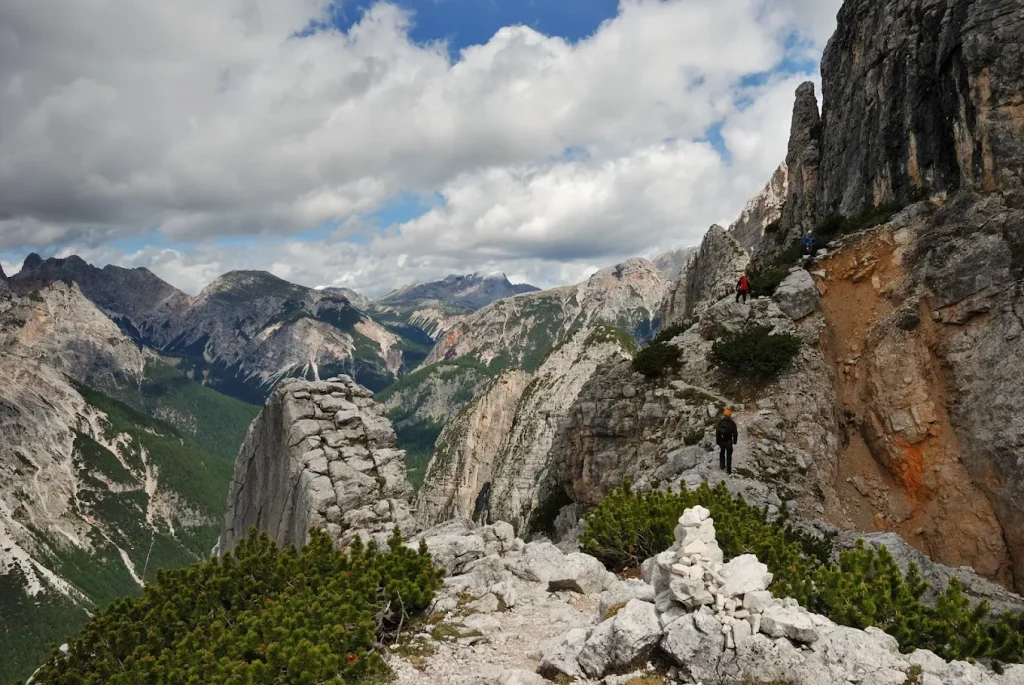
The trail ascends gradually through forested slopes before transitioning into rocky terrain that leads towards the ridge and the Pomagagnon fork (Forcella Pomagagnon), an important mountain pass connecting several routes.
Planning checklist:
- Check the weather forecast before departure
- Begin early, especially in the summer months
- Carry offline maps or GPS
- Inform someone of your itinerary
Routes and difficulty of the Terza Cengia Via Ferrata
The Terza Cengia route is one of the most popular ways to explore Pomagagnon.
It has an exposed ledge traverse with sections of protected climbing, best for intermediate hikers with some ferrata experience.
Approximate route statistics
- Total route length (including approach): 6–8 km
- Elevation gain: 900–1,100 m
- Average duration: 6–8 hours
- Difficulty rating: Moderate (B/C on standard ferrata scale)
The terrain alternates between exposed ledges, cable-protected rock passages, and occasional scrambling sections along the ridge.
Although the route is technically manageable, its length and exposure mean that you must have good stamina, sure-footedness, and a solid comfort level with heights. Therefore, it is best suited to hikers who already have some via ferrata experience, maintain good physical fitness, and are capable of managing long alpine routes.
If you are attempting the climb for the first time, we suggest hiring a certified mountain guide to ensure both safety and confidence throughout the ascent.
Views and points of interest from Forcella Pomagagnon
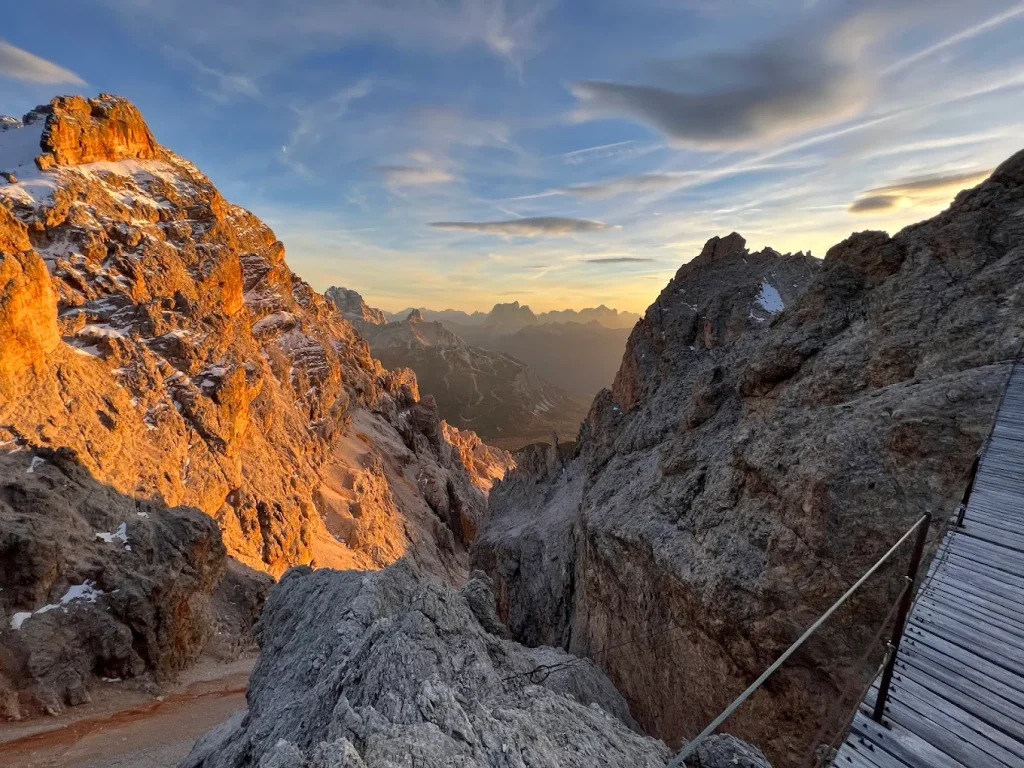
The Pomagagnon fork (Forcella Pomagagnon) is one of the most scenic sections of the climb, with breathtaking views across the Ampezzo valley and the surrounding Dolomite peaks.
From this vantage point, you can enjoy panoramic views of:
- Cortina d’Ampezzo
- The Cristallo mountain group
- Sorapis and the surrounding Dolomite massifs
- Alpine valleys stretching north toward the Austrian border
The ridge is also known for its alpine wildlife and seasonal vegetation, particularly in July and August when mountain flowers cover the slopes. You can also find remnants of wartime installations along certain sections of the trail.
Essential equipment for the Via Ferrata
Proper preparation is essential when tackling the Pomagagnon Via Ferrata, as weather and terrain conditions can change quickly in the Dolomites.
Mandatory equipment:
- Helmet
- Via ferrata lanyard with energy absorber
- Climbing harness
- Protective gloves
- Sturdy mountain boots
We also recommend bringing trekking poles for the approach hike, as well as 2–3 litres of water to stay properly hydrated throughout the ascent.
Carrying energy snacks can help maintain stamina, while a headlamp and emergency blanket provide essential backup in case of unexpected delays.
Finally, a lightweight waterproof jacket is advisable, as mountain weather conditions can change quickly.
Safety tips:
- Always keep both carabiners clipped to the cable
- Maintain safe spacing between climbers
- Avoid climbing during thunderstorms
- Turn back if weather conditions deteriorate
Discover the adventure in Pomagagnon
Pomagagnon has the perfect mix of alpine adventure, historical trails, and breathtaking scenery, making it one of the most memorable via ferrata experiences in the Cortina d’Ampezzo region.
If you’re planning to explore the Pomagagnon Via Ferrata, choosing accommodation close to Cortina provides both convenience and comfort after a demanding alpine day.
Booking your stay with D4U and placing yourself near the region’s most iconic hiking and climbing routes while enjoying a relaxing base from which to discover the unforgettable landscapes of the Dolomites.


