
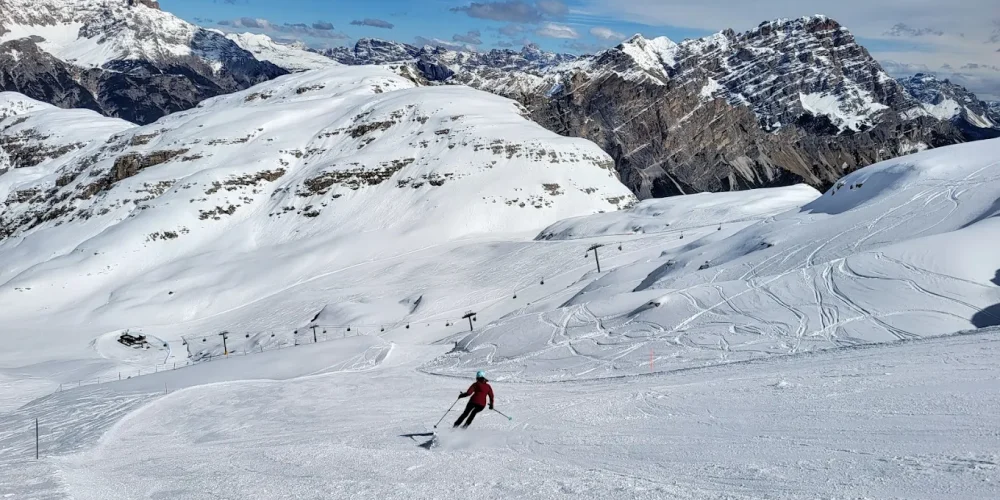
Above the dramatic skyline of the Dolomites, you will find one of the most fascinating natural formations in northern Italy, the Bus de Tofana.
This enormous rock window carved into the mountain is a must-see stop, especially for hikers, climbers, photographers, and winter sports enthusiasts looking for something beyond the ordinary ski resort experience.
This guide explains what Bus de Tofana is, how to explore the area through Bus de Tofana ski mountaineering routes, and how to organise safe and memorable visits to the area.
What is the Bus de Tofana?
Bus de Tofana is a natural rock arch located within the Tofane mountain group near Cortina d’Ampezzo in northeastern Italy. The word “Bus” means “hole” in the local Ladin language, and the formation resembles a giant window carved through the limestone rock.
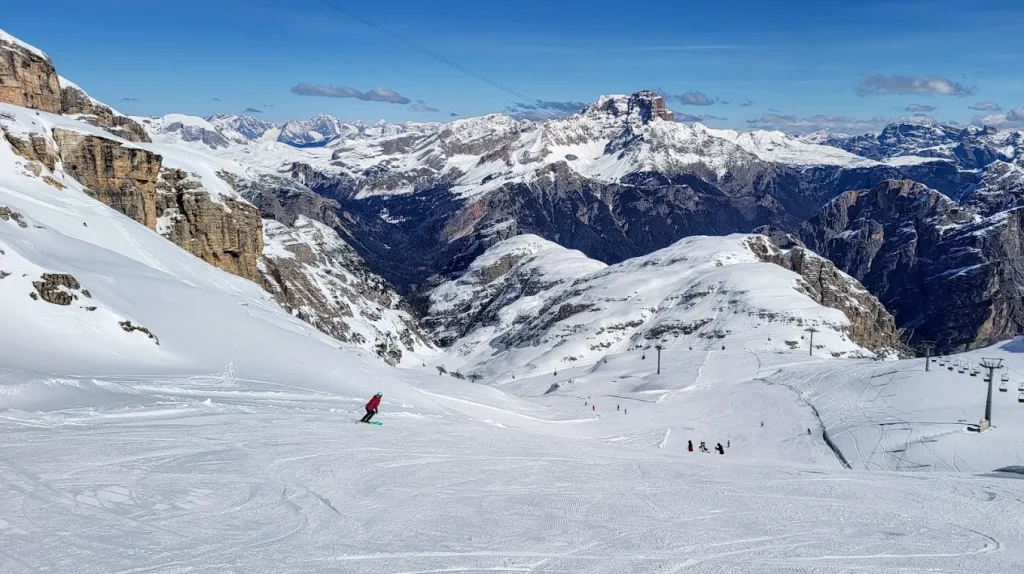
This geological feature is on the slopes of Tofana di Rozes, one of the most recognisable peaks in the region. The opening formed through centuries of erosion, caused by wind, water, and freeze–thaw cycles typical of high alpine environments.
Why is Bus de Tofana famous?
- One of the largest natural rock windows in the Dolomites
- Spectacular panoramic views of the Ampezzo Valley
- Popular stop on scenic hiking and climbing routes
- Iconic photography location at sunrise and sunset
- Key point of interest for alpine adventurers seeking unusual terrain
| Pros | Cons |
| Unique natural landmark | Requires good physical fitness |
| Less crowded than the central Cortina attractions | The weather can change rapidly |
| Suitable for hikers and ski mountaineers | Some routes are exposed and not beginner-friendly |
| Exceptional alpine photography opportunities | Limited facilities in high alpine terrain |
What is the altitude of Bus de Tofana?
The Bus de Tofana altitude is approximately 2,800 metres above sea level. This makes it a high-alpine destination that requires preparation and proper acclimatisation.
At nearly 3 km above sea level, oxygen levels are lower, and weather conditions are more severe than in the valley. Temperatures can drop below freezing even in summer, and strong winds are common.
How altitude can affect your visit
At the Bus de Tofana altitude, you may experience:
- Faster fatigue during physical activity
- Increased dehydration risk
- Greater UV exposure
- Possible mild altitude sickness for sensitive individuals
Essential altitude safety tips
When visiting areas at high elevation, it is important to take certain precautions to stay safe and comfortable.
First of all, try to ascend gradually whenever possible so that your body has time to adjust to the reduced oxygen levels. In addition, staying well hydrated is essential, so drinking at least two to three litres of water per day is strongly recommended.
At higher altitudes, the sun’s radiation is also more intense, so apply high-SPF to help protect your skin. It is equally important to wear layered technical clothing, as temperatures can change quickly throughout the day.
Finally, if you begin to feel dizzy or unusually fatigued, it is best to avoid intense physical exertion and allow your body time to recover.
Ski mountaineering routes at Bus de Tofana
During winter and spring, Bus de Tofana ski mountaineering becomes one of the most rewarding alpine adventures in the Dolomites. The area is famous for steep couloirs, open snowfields, and dramatic descents.
Unlike piste skiing in resorts, ski mountaineering combines uphill climbing using skins with off-piste downhill skiing, often in untouched snow.
Why is the area popular for ski mountaineering
- Reliable snow coverage from December to April
- Wide vertical drops exceeding 1,000 metres
- Technical terrain for experienced ski mountaineers
- Fewer crowds than lift-served resorts
Popular route areas near Bus de Tofana
Tofana di Rozes south faces
- Long, continuous descents
- Steep gradients exceeding 40° in sections
- Suitable for expert-level ski mountaineers
Val Travenanzes approaches
- Wide alpine valleys
- Safer ascent lines
- Scenic approach routes
High couloir descents
- Narrow channels carved into rock
- Require avalanche knowledge
- Often attempted with certified mountain guides
Essential ski mountaineering gear checklist
- Touring skis with skins
- Avalanche transceiver, probe, and shovel
- Helmet and protective gear
- Harness and rope (for technical sections)
- GPS device and topographic maps
- Emergency bivouac equipment
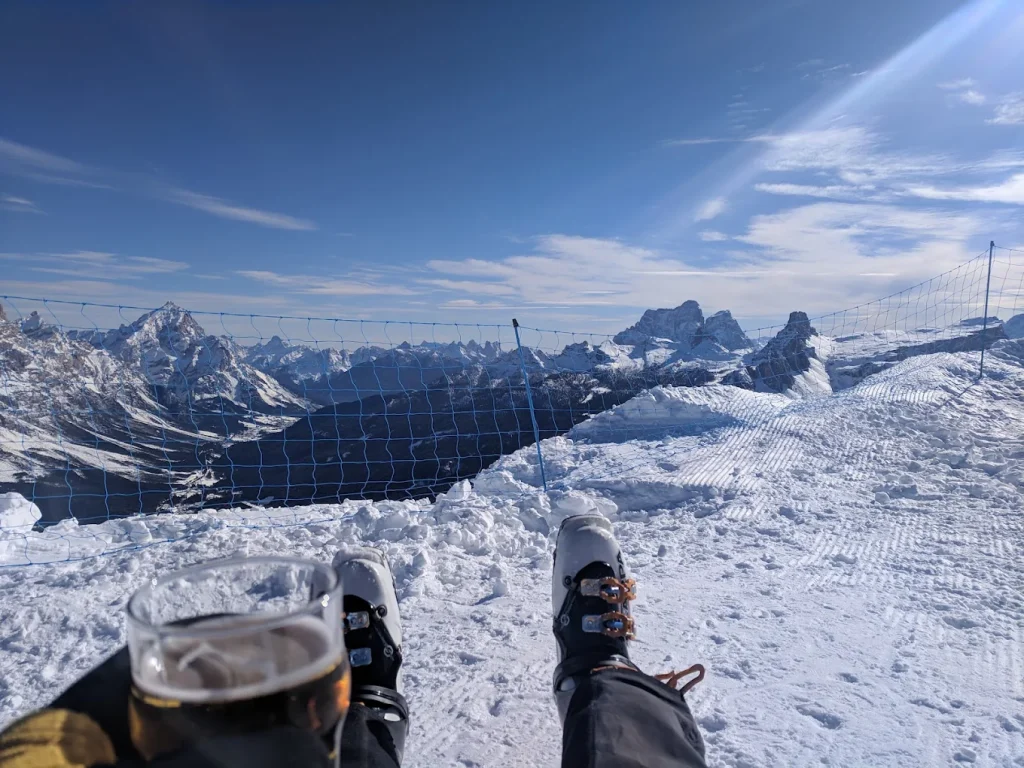
Pro Tip: Hiring a certified alpine guide in Italy is strongly recommended for safety.
Planning your visit to the Tofana Bus
Careful planning ensures safe and enjoyable visits to the Tofana Bus, whether travelling in summer or winter.
Best time to visit
The best time to visit Bus de Tofana largely depends on the type of experience you are looking for.
From June to September, the area typically has stable weather conditions and clear mountain trails, making this period ideal for hiking and alpine photography. However, during October and November, the weather becomes more unpredictable and early snowfall may affect access, so these months are generally better suited to experienced trekkers who are comfortable with changing conditions.
In contrast, from December to April, the Dolomites experience deep snow, creating excellent conditions for Bus de Tofana ski mountaineering and other winter alpine activities.
May marks the transition into spring, when melting snow and variable trail conditions make the area more appropriate for advanced hikers who are prepared for mixed terrain.
How to reach the area
Most travellers stay in Cortina d’Ampezzo, which is:
- 2 hours from Venice by car
- 1.5 hours from Bolzano
- Accessible via the SR48 mountain road
From Cortina:
1. Drive or take local transport towards Rifugio Dibona
2. Follow marked alpine trails
3. Continue via mountain paths towards the Tofana slopes
Safety considerations
Thunderstorms develop quickly in summer afternoons, while snow bridges may collapse in late spring. Remember that your mobile signal may be unreliable, so make sure to communicate with friends and family about your excursion ahead of time.
We suggest hiring local alpine guides for added safety.
Visit the Tofana Bus
Bus de Tofana is one of the Dolomites’ most impressive natural landmarks, combining geological wonder with high-altitude adventure.
If you are searching for comfort after a day in the mountains, staying nearby makes all the difference. D4U offers carefully selected alpine accommodation that provides easy access to Cortina’s lifts, hiking trails, and the Tofane region.


