
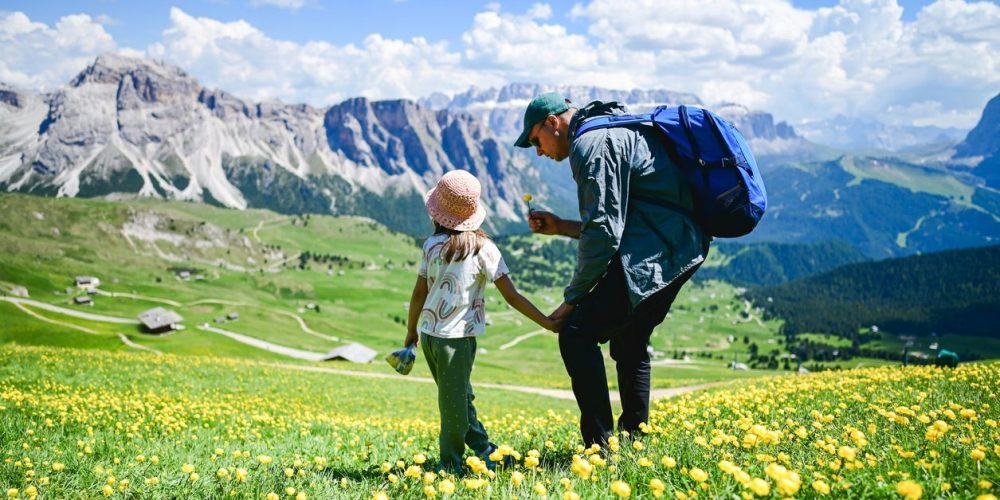
The Dolomite Alte Vie is one of the most remarkable long-distance trekking routes in Europe. It crosses through the heart of the Dolomites from north to south, and will take you across high peaks, alpine meadows, and historic mountain refuges.
This guide explores the Dolomites Alte Vie in detail, explaining how the routes work, the differences between them, difficulty levels, maps, logistics, and practical advice to help you plan your Dolomites hike.
What are the Alte Vie of the Dolomites?
The term Alte Vie translates as “high routes” and refers to a network of long-distance trails that traverse the Dolomites. These routes run through many villages such as Cortina d’Ampezzo, Corvara and Belluno, crossing rugged alpine terrain at elevations that exceed 2,000 metres.
Many sections of the Alte Vie follow historic mule tracks and military paths dating back to the First World War.
Key facts:
- Number of routes: 8 official Alte Vie
- Average route length: 90–160 km
- Typical duration: 7 to 14 days
- Best season: late June to mid-September
The Dolomite Alte Vie are well-known for its balance between adventure and ease, thanks to the extensive network of mountain refuges. At these mountain huts, you can stay the night or enjoy a quick meal before continuing on your adventure.
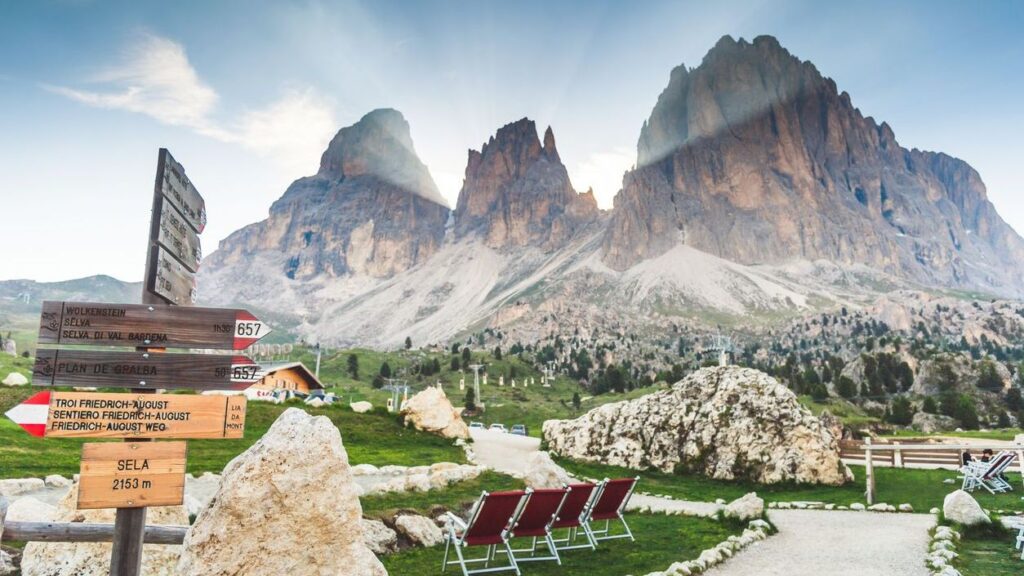
The 8 main routes
There are 8 Alte Vie in the Dolomites, each with a different level of difficulty, scenery, and remoteness.
Alta Via 1
- Distance: About 120 km
- Duration: 10–12 days
- Difficulty: Moderate
Alta Via 1 is the most popular and beginner-friendly route. It has well-marked trails, gentle ascents, and frequent refuges.
Alta Via 2
- Distance: About 160 km
- Duration: 12–14 days
- Difficulty: Challenging
Alta Via 2 is more technical and includes exposed sections and via ferrata passages. It is suitable for experienced hikers comfortable with height and basic climbing equipment.
Alta Via 3
A quieter and more remote route, ideal for those seeking solitude. It involves longer stages and fewer refuge options.
Alta Via 4
Characterised by rugged alpine terrain and dramatic passes. Good fitness and mountain experience are required.
Alta Via 5
Shorter than others but physically demanding, with steep ascents and descents.
Alta Via 6
One of the wildest routes, passing through less frequented parts of the Dolomites.
Alta Via 7
A high-altitude route with challenging conditions and limited infrastructure.
Alta Via 8
Located in the southern Dolomites, this is the least crowded option and ideal for hikers looking for a quieter experience.
Difficulty levels and duration
The Dolomites Alte Vie vary significantly in difficulty. While some routes are accessible to fit beginners, others require advanced alpine skills and equipment.
What determines difficulty?
Daily elevation gain often ranges between 800 and 1,200 metres, which can be physically demanding over consecutive days.
In addition, many sections have exposed trails and narrow paths, requiring confidence and sure-footedness. On certain routes, the presence of via ferrata sections makes it more technical, and you require specific equipment and experience.
Finally, weather variability at higher altitudes plays a significant role, as conditions can change rapidly and directly affect both safety and overall trekking difficulty.
Typical trekking profile:
- Walking time per day: 5–7 hours
- Altitude range: 1,500–3,200 metres
- Total ascent per route: up to 15,000 metres
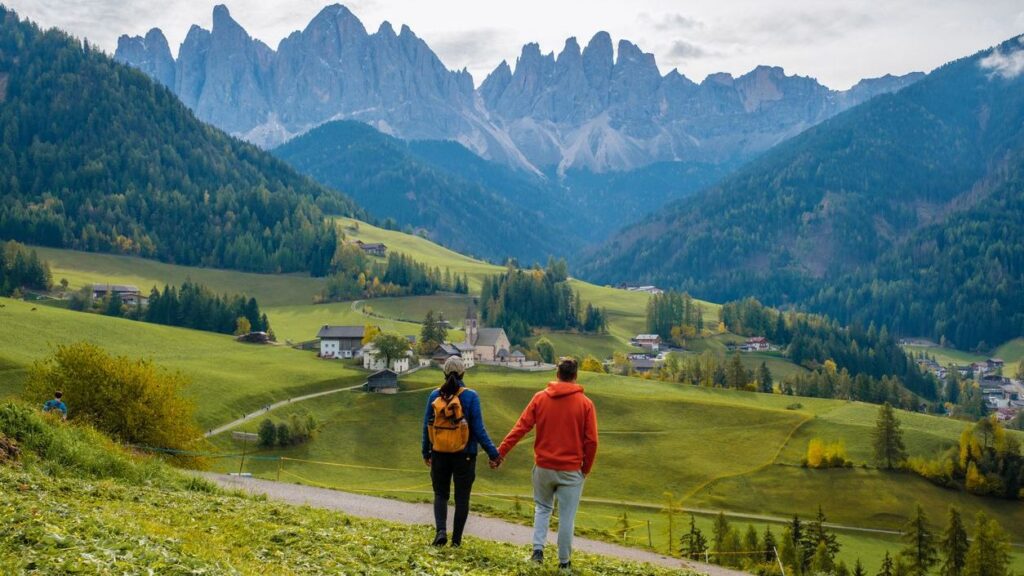
Important
Before choosing a route, you must consider several personal factors.
First, consider your previous experience with multi-day trekking, as walking for several consecutive days requires both endurance and good recovery. Equally important is your comfort level with heights and exposed paths, which are common on many sections of the trails.
Your overall physical conditioning should also be assessed, as daily ascents and long walking hours can be demanding. Finally, you should evaluate your ability to continue in changing weather conditions, as mountain environments are unpredictable.
General map of the Alte Vie
A Dolomites Alte Vie map is essential for understanding how the routes are laid out and how they connect valleys, passes, and refuges.
Most routes run roughly north to south, with multiple access points allowing you to join or leave the trail at different stages. Maps typically show:
- Daily stages and elevation profiles
- Refuge locations
- Emergency exit routes to valleys
While digital GPX tracks are used, experienced hikers still recommend carrying a paper map as a backup, as mobile signal can be unreliable.
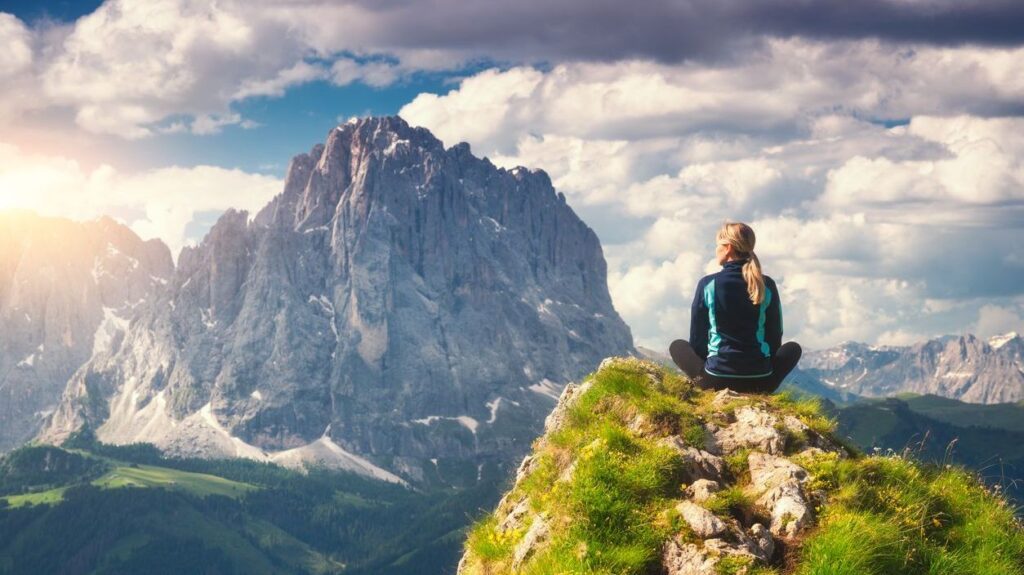
Refuges and logistics
One of the defining features of the Dolomites Alte Vie is the extensive network of mountain refugesm known locally as rifugi.
Generally, refuges offer shared dormitory accommodation, dinner and breakfast on a half-board basis, as well as drinking water and basic facilities. In terms of costs, half board usually ranges between €60 and €80 per night, with dormitories typically accommodating 20 to 80 hikers.
From a logistical point of view, we highly recommend booking refuges weeks or even months in advance during the peak summer months of July and August. Additionally, carrying cash is important, as card payments are not always accepted, and packing light is strongly recommended.
Tips for completing the Dolomite Alte Vie hike
Good preparation is essential. Refuges should be booked in advance, weather forecasts checked daily, and layered clothing carried to adapt to rapid changes in conditions, while starting early helps avoid afternoon storms.
When choosing between guided and self-guided trekking, guided routes offer greater safety and local expertise but less flexibility and higher costs. However, self-guided treks give more freedom at a lower cost but require careful planning.
Finally, keep safety in mind. Summer thunderstorms are frequent, snow can linger on high mountain passes until July, and you should always inform someone of your planned route and expected arrival times.
Come and plan your trip today
If you’re seeking adventure, breathtaking scenery, and a true immersion in the mountains, trekking the Dolomites Alte Vie is an unforgettable experience.
To make the most of your journey, stay locally before or after your trek.
Comfortable accommodation allows you to recover, organise logistics, and explore the surrounding valleys at a relaxed pace. D4U offers strategically located accommodation options, ideal for accessing trailheads and enjoying the Dolomites beyond the trails themselves.


